How to Set a Realistic Budget for House Construction
Building a house is an exciting experience, but it is also a major financial decision. Before construction starts, one of the most important things to understand is how much the project may actually cost.
A common mistake is to decide on a house design first and think about the budget later. In reality, the design, built-up area, materials, structure, finishes and services all have an impact on the final cost.
A realistic budget prepared at the beginning can help you make better decisions throughout the construction process.
Start With the Size of Your House
The first step is to understand how much area you are planning to construct. A larger house generally means more material, labour, electrical work, plumbing, flooring and finishing work.
Instead of only looking at the plot size, focus on the actual built-up area and decide which spaces are essential for your family.
Understand Where Your Money Will Go
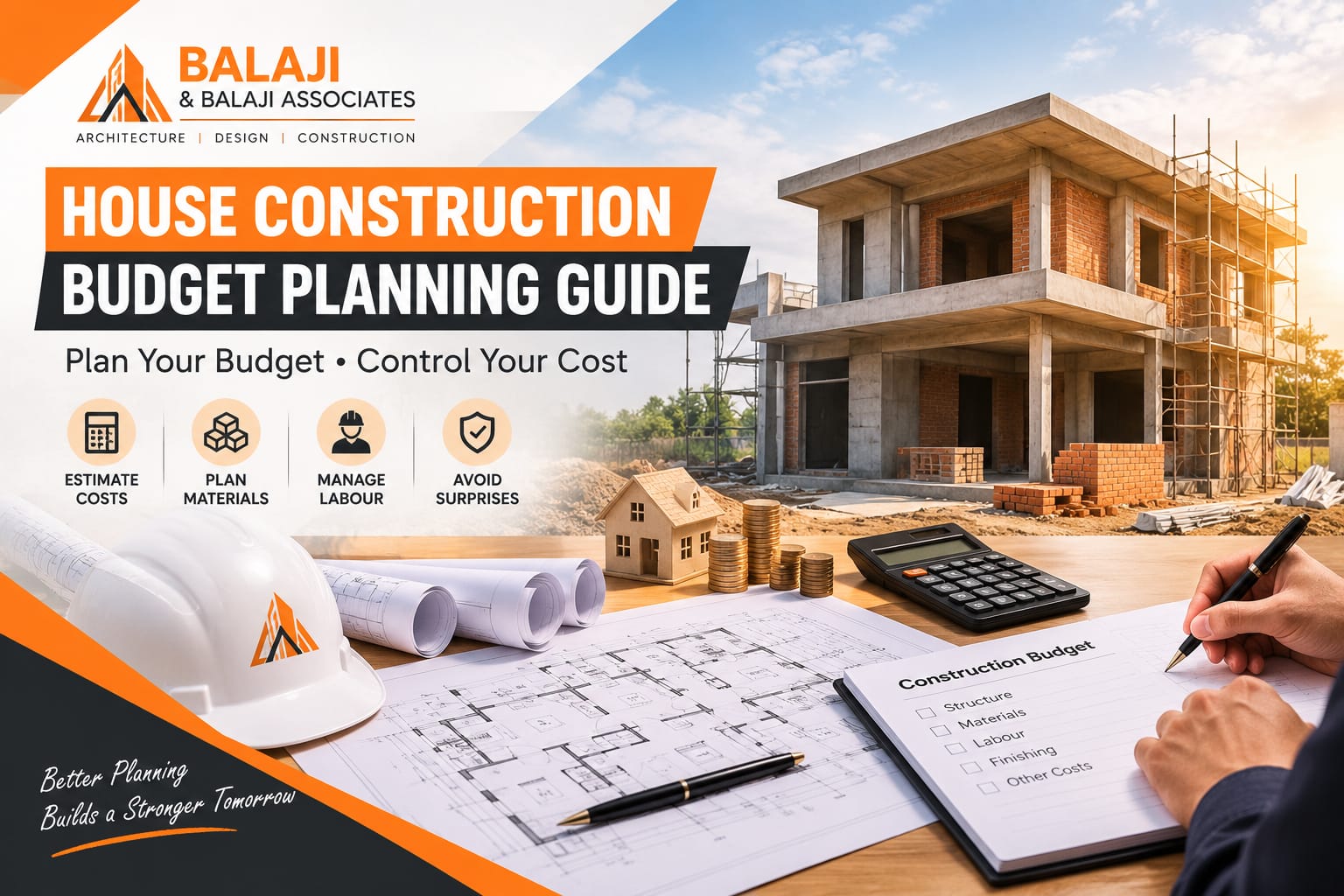
House construction is not one single expense. Your budget is divided between different stages and requirements.
- Site preparation and foundation
- RCC and structural work
- Brick or block work
- Plaster and flooring
- Doors and windows
- Electrical work
- Plumbing and sanitary work
- Painting and finishing
- Kitchen and other fixed installations
- Exterior development and other site work
Understanding these categories makes it easier to track your spending and identify where the budget is increasing.
Choose Materials According to Your Budget
There are usually several options available for construction and finishing materials. The most expensive option is not always necessary for every part of the house.
Discuss the available choices with your architect and contractor and decide where quality should be your priority and where a practical alternative can be used.
For example, you may want to spend more on important structural elements, good-quality plumbing and electrical systems, while selecting simpler finishes in areas where they are not essential.
Do Not Forget Labour and Site Expenses
People sometimes calculate the cost of materials but underestimate labour and other site-related expenses.
Construction involves masons, helpers, electricians, plumbers, carpenters, painters and other workers depending on the stage of the project. Transportation, loading, unloading and small site requirements can also add to the total cost.
These expenses should be considered while preparing the initial budget.
Keep a Contingency Amount
Even with proper planning, construction projects can have unexpected expenses. Material prices may change, additional work may become necessary, or some site condition may require a different solution.
For this reason, it is sensible to keep a separate contingency amount instead of planning to spend every rupee of your available budget.
This small buffer can make it easier to handle unexpected requirements without disturbing the entire project.
Do Not Change the Plan Too Often
Changes during construction can affect both time and cost. Moving a wall, changing plumbing points, modifying electrical locations or selecting different materials after work has started may require additional labour and material.
Try to finalize the important planning decisions before construction begins. If you want changes, discuss them with your architect and site team before the related work starts.
Make a Stage-Wise Construction Budget
Instead of looking at the complete construction cost as one large amount, divide the budget into different stages.
For example, you can track foundation work, structure, masonry, electrical and plumbing, flooring, doors and windows, painting and finishing separately.
A stage-wise budget makes it easier to compare planned expenses with actual expenses during construction.
Keep Track of Actual Expenses
Preparing a budget is only the first step. You should also keep checking how much has actually been spent.
Maintain records of material purchases, labour payments, contractor bills and other expenses. Regular tracking can help you identify a budget gap before it becomes a major problem.
Budget Should Support the Design
A good house design should match the budget of the owner. The aim is not simply to make the biggest or most expensive house possible.
The better approach is to create a practical design where space, comfort, appearance and construction cost are balanced properly.
Final Thoughts
Planning a realistic construction budget before starting work can save you from many financial surprises later. Understand your requirements, decide the size of the house, discuss material options, consider labour and site expenses and keep some amount aside for unexpected costs.
Most importantly, discuss your budget openly with your architect before finalizing the design. A clear budget helps the design and construction team make practical decisions from the beginning.
Planning to build your home? Start with a practical design and a clear budget so that your construction journey remains organised from the first stage to the final finish.